


| Visitation: 43,500 | ||
| Area: 1,000 Acres | ||
| Lat: | ||
| Lon: | ||
| Nearby Services | ||
 |  |  |
| Site Facilities | ||
 |
 |
 |
 |
 |
 |
 |
||
| Join Our Mailing List |
|
For Email Marketing you can trust
|

|
Top Banner Photo Credits
Gary Skipper
American Pika
Rich Warren
Bullocks Oriole
Cindy Croissant
Yellow-faced Bumble Bee
Samira Furlan
Channel Islands National Park Island Fox
Annette Siegel
Young Oystercatcher
Chih-Hsin Wang
Great Egret
Kaelyn DeYoung
San Joaquin Antelope Squirrel
Gary Skipper
American Pika
Rich Warren
Bullocks Oriole
Cindy Croissant
Yellow-faced Bumble Bee
Samira Furlan
Channel Islands National Park Island Fox
Annette Siegel
Young Oystercatcher
Chih-Hsin Wang
Great Egret
Kaelyn DeYoung
San Joaquin Antelope Squirrel
© 2008-2026 California Watchable Wildlife and SnowlineGraphics.com
| Anderson Marsh State Historic Park - Site # 18 | |||
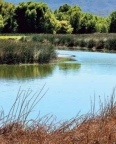
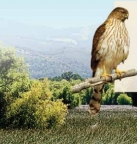
| This small preserve safeguards half of Clear Lake's tule marshes and supports everything from newts to American white pelicans. Lush tules border the lake and offer food, cover, and breeding areas for fish, water-associated birds, and pond turtles. Opossums, minks, bats, and other mammals also use the marshes. Willows and alders along watercourses shelter bald eagles and hummingbirds. An oak woodland offers views of Cooper's hawks, cavity-nesting birds, black-tailed deer, and squirrels; lizards and rattlesnakes inhabit the forest floor. Grassy fields hide rodent runways and the spring nests of western meadowlarks and killdeer; they also draw hovering American kestrels and white-tailed kites. There's a great blue heron rookery on site. | |||
 | Regional - worth visiting if you are already in the area. They may be located farther from populated areas or with more limited wildlife species. | ||

| |||
| Background: | Anderson Marsh State Historic Park occupies the southeast corner of the oldest freshwater lake on the North American continent. The largest freshwater lake located entirely within California’s boundaries, Clear Lake has been known to yield lake sediment samples as much as a half-million years old. From late spring to early winter, the marsh is lush and green, its open waters edged by tules and other aquatic growth. Bird watching is rewarding here. Besides fishing, the lake—full of non-native crappie, bluegill, black bass, and catfish—also offers boating, camping, picnicking, and swimming | ||
| Anderson Marsh State Historic Park is a nature reserve preserving a tule marsh, and archaeological sites of the Pomo people. The Lake Miwok people occupied the southern basin of Clear Lake, east of Seigler Canyon Creek. They speak Ko ots a’Ataw, one of seven distinct Miwok languages. They fished at the southern basin of Clearlake,hunted, and gathered willow, tule, and pine to make baskets. Acorns were used to make bread and mush; the people traveled to the ocean to gather seaweed and shells. Traditional village structures were built with tule, pine, and gray willow. Social activities included traditional feather dancing, ball dances, races, and hand games. Today, the descendants of these peoples use many of the same natural resources their ancestors did. The abundance of resources made Anderson Marsh a gathering place for the native people. The Koi, Lake Miwok, Pomo, Wappo, and Wintun have revived and preserved their ancestral languages and cultures and continue to teach them to future generations. Everything at Anderson Marsh State Historic Park gives a glimpse of the beauty that was and still is cherished by the native people of Lake County. | |||
| The Habitat: | The freshwater marsh has two major zones—permanently and seasonally underwater. The smaller, permanently inundated zone consists of year-round open water and supports over half of the remaining tule habitat within Clear Lake. The larger, seasonally inundated zone is perfect for the sedge-rush prairie to thrive. The marsh’s waters are home to mallards, double-crested cormorants, and various species of gulls. Terns like to forage here. State-endangered bald eagles winter in the area, to partake of fish and carrion left over from spawning activities in these open waters. Where plants peek above the water’s surface (emergent vegetation), a large number of western grebes are found. Pied-billed grebes, mallards, cinnamon teals, American coot, marsh wrens, and red-winged, tri-colored and yellow-headed blackbirds also live here. Riparian habitat along Cache and Seigler Canyon creeks is dominated by cottonwoods, valley oaks, California buckeye, California bay, and the rarely seen native California black walnut. The understory in this habitat includes snowberry, California wild rose, and the invasive Himalayan blackberry. Riparian woodland, the smallest and most dense habitat, sustains the greatest species diversity and supports one of the largest great blue heron rookeries on the lake. Red-shouldered hawks, great horned owls, Anna’s hummingbirds, American crows, wood ducks, phainopepla, golden eagles, and northern orioles thrive here. | ||
| Wildlife and Where to Find It: | Excellent viewing of waterfowl and songbirds from November through April. Western grebes, double-crested cormorants, and great blue herons can be seen year-round. Watch spring courtship and nesting of grebes. American white pelicans best seen in winter. Ospreys fish both summer and winter; bald eagles present from November through April. Quiet, patient observers can see many small mammals and songbirds. | ||
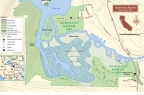
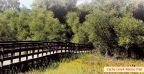
| Site Notes: | Anderson Flats Trail is a trail through the marsh that is accessible for about 0.3 mile. Cache Creek Nature Trail is a trail through grassland and riparian habitats that is accessible for about 0.5 mile. Both trailheads, an accessible restroom, potable water (from a hose bib), and accessible parking are in the parking lot that serves the Anderson Ranch House. Provided accessible parking stalls are paved; the remainder of the parking lot is unpaved and is generally firm, level, and stable in dry weather. | ||
| Nearby Viewing Sites: | Clear Lake State Park Cache Creek Natural Area | ||
| Festivals & Events: | Monthly Guided Nature Walks will be held at Anderson Marsh State Historic Park on the second Saturday of each month, except for January and December. The Guided Walks are led by State Parks interpretive specialists and volunteer State Parks Docents, and provide an opportunity to observe wildlife at the Park and learn about their natural habitat, as well as to learn about the natural and cultural history and geology of the area. Tours of the interior of the historic Anderson Ranch House have been temporarily suspended while renovation work proceeds on the building. The trail system at the park is also open to visitors during daylight hours for outdoor recreation such as hiking and bird watching. Walks begin at 8:30am. Meet in the parking lot at 8:15am for an opportunity to observe the birds and other wildlife found in the picnic area.The walks take between 1½ and 3 hours, depending on the route taken. Steady rain will cancel the nature walk. | ||
| Visitor Information: | Lake County Visitor Center - 800 525 3743 - http://www.lakecounty.com | ||
| Viewing Site Hours of Operation are: | |||
| Staff On-site: | Yes | ||
| Open: | Sun, Wed, Thur, Fri, Sat | ||
| Hours: | 8am-5pm winter, 8am-8pm summer Hours may change, | ||
| Year Round: | Yes | ||
| Road Information: |  Gravel. Gravel. | ||
| Road Hazards: | |||
 Number of Parking Spaces: 50 Number of Parking Spaces: 50 | |||
| Parking Fee: Yes | |||
| Proximity to viewing area:nearby | |||
 Pull-Through Parking: Pull-Through Parking: | |||
| Parking Notes: $4 per car $3 per car seniors | |||
| How to Get There: | From the junction of Highways 29 and 53 at Lower Lake, proceed north for 0.5 mile on Highway 53 to entrance. | ||
| Contact Information | |||
| Managing Agency: | California State Parks | ||
| Agency Site URL: | http://www.parks.ca.gov | ||
| Physical Address: | N 8825 Highway 53 Lower Lake, CA 95457 |
Agency 2: | PO Box 672 Lower Lake, CA 95457 |
| Manager Phone: | (707) 279-2267 | Contact Us: | by Email |
| Site Phone: | (707) 995-2658 | ||
| County: | Lake | ||
| Addition Website: | https://www.andersonmarsh.org | ||