|
Calaveras Big Trees State Park Site # 5065 | |||
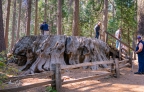
| Calaveras Big Trees State Park preserves a mixed conifer forest, featuring two main groves of ancient Giant Sequoias, the North and South Groves, nestled in the Sierra Nevada mountains. The habitat consists of vast, towering forests, natural meadows, the Stanislaus River, and Beaver Creek, located at approximately 4,500 feet elevation. The largest tree in Calaveras Big Trees State Park is the Louis Agassiz tree. It is located in the South Grove. This tree is "only" 250 feet tall, but it is over 25 feet in diameter six feet above the ground! | |||


| |||
| Background: | |||
| Established in 1931, Calaveras Big Trees State Park preserves a mixed conifer forest with two groves of giant sequoias - the North Grove and South Grove. In addition to the giant sequoia trees, you will find the Stanislaus River, Beaver Creek, ancient volcanic formations, natural meadows, and trails throughout the park allow you to discover the area that has awed visitors since 1852. | |||
| The giant sequoia was well known to Native American tribes living in its area. Native American names for the species include Wawona, toos-pung-ish and hea-mi-within, the latter two in the language of the Tule River Tribe. The Miwok people, specifically the Northern Sierra Miwok, inhabited the Calaveras Big Trees region, acting as skilled environmental stewards who respected the giant sequoias. Their culture focused on a deep connection to the land, utilizing controlled burns, hunting, fishing, and gathering acorns for food. They lived in seasonal villages with bark houses and are known for their intricate basketry and tradition of passing knowledge down through generations. | |||
| Wildlife and Where to Find It: | |||
| Known best for giant sequoias that seem to jab the sky, this mixed conifer forest bisected by the Stanislaus River also has diverse but somewhat elusive wildlife. Watch the dense canopy for resident white-headed woodpeckers, pilated woodpeckers, spotted owls, nothern goshawks, and the ever-present Douglas' and western gray squirrels. During the summer, look or listen for western tanagers, black-headed grosbeaks, mountain chickadees, and dark-eyed juncos. Lava outcroppings tower above the river, where streamside habitat is inhabited by American dippers, belted kingfishers, and many species of warblers, vireos, and flycatchers. A wet meadow harbors mallards, common mergansers, and great blue heron. You may also spot mule deer, coyotes, bobcats, black bears, or mountain lions almost anywhere. Woodpeckers, nuthatches, and squirrels frequent the campgrounds. | |||
| Viewing Tips: | |||
| Take time: wildlife is abundant but well hidden. Good year-round viewing; summer is best for song birds. Many butterflies in spring and summer. Two universally accessible trails. | |||
| Site Notes: | |||
| $10 per vehicle for up to 9 passengers A free, guided hike is available at 1:00 pm each Saturday, given by a knowledgeable docent or ranger. These hikes are filled with amazing information you won’t get anywhere else – so if you want to know more about the flora, fauna, and history of this beautiful place, do plan on trying to join one. | |||
| Nearby Viewing Sites: | |||
| New Hogan Lake | |||
| Visitor Information: | |||
| Calaveras County Visitors Bureau 209-736-0049 Visit website | |||
| Viewing Site Hours of Operation are: | |||
| Staff On-site: | Yes | ||
| Open: | Daily | ||
| Hours: | Sunrise to Sunset | ||
| Year Round: | Yes | ||
| Road Information: | |||
 Paved. Paved. | |||
| Road Hazards: | |||
 Number of Parking Spaces: 0 Number of Parking Spaces: 0 | |||
| Parking Fee: Yes | |||
| Proximity to viewing area: | |||
 Pull-Through Parking: Pull-Through Parking: | |||
| Parking Notes: Ample day-use parking, primarily near the North Grove Visitor Center, with a $10 fee per vehicle. Parking is available from sunrise to sunset. The main lot provides easy access to the North Grove trail, though parking near the visitor center can be limited during peak times | |||
| Special Tips: | |||
| Park staff answer the phone at the main gate 7 days a week unless they are busy with incoming guests. Campground reservations can be made online at www.reserveamerica.com | |||
| How to Get There: | |||
| The park is located four miles northeast of Arnold, CA (northeast of Stockton). | |||